Short answer: COVID disrupted schooling more than it erased learning: students kept making progress, but fell behind pre-pandemic expectations, about five months in math and four in reading by the end of the 2020-21 school year. Families can help students recover by staying positive, promoting reading, engaging with schoolwork, using summers well, and getting tutoring for math and science.
The pandemic changed how students learned for more than two years. Understanding what was actually lost, and what wasn’t, is the first step toward helping your child catch up.
Key points
- Behind, not backward: Students kept learning; the gap is against pre-pandemic projections.
- Math hit hardest: McKinsey found students about five months behind in math and four in reading.
- Attitude matters: Validate setbacks but insist your child can catch up.
- Tutoring works best: High-dosage tutoring shows bigger gains than other interventions.
- Smart study habits: Saying it aloud, writing by hand, spacing and self-testing aid recovery.
- Use the summer: Summer programs can focus on core gaps without homework pressure.
What is COVID learning loss?
There’s an intense debate over the term “COVID learning loss” and whether to use those words at all. Some fear that students will despair if we focus too much on perceived deficits, or that the phrase will stigmatize less-advantaged students, who suffered the greatest setbacks.
For these reasons, alternative terms such as “COVID learning recovery” and “COVID unfinished learning” have started to circulate. Whichever term you prefer, the important thing is to focus on future achievement instead of mourning past losses.
But what exactly was lost during the pandemic? Where are students underperforming compared to pre-pandemic classes, and why?
How has COVID affected students?
First, some good news. COVID learning loss isn’t like summer learning loss, the widespread phenomenon where students who don’t take part in enrichment programs forget course material over the break and teachers spend the first weeks of fall in review.
In fact, the phrase “learning loss” can be misleading when discussing COVID-19 and education. Students have made progress during the pandemic, and they haven’t forgotten things they once knew.
The loss is relative to projections about where they “should” be, based on pre-pandemic classes.
There’s also a difference between learning loss and schooling loss. Children learn. They can’t help it. No one knows that better than a parent who has heard a child repeat something they really wish hadn’t been overheard.
The pandemic has been brutal. It affected children’s mental health and social development as well as their schooling. But they’ve also become more self-sufficient and more technology-literate, and they’ve probably benefited from more time with you.
Yes, COVID learning loss is real, and it’s important to help your child overcome it. Just don’t lose perspective: children are more resilient than we think.
How much learning has been lost?
School shutdowns and distance learning may be the biggest contributors, but other disruptions affected students too. Quarantines, staff shortages, and a growing range of student needs all make education harder.
Increased absenteeism also holds students back, or even leads them to drop out. Unless the situation changes, the coming years could see more than a million additional students fail to graduate high school.
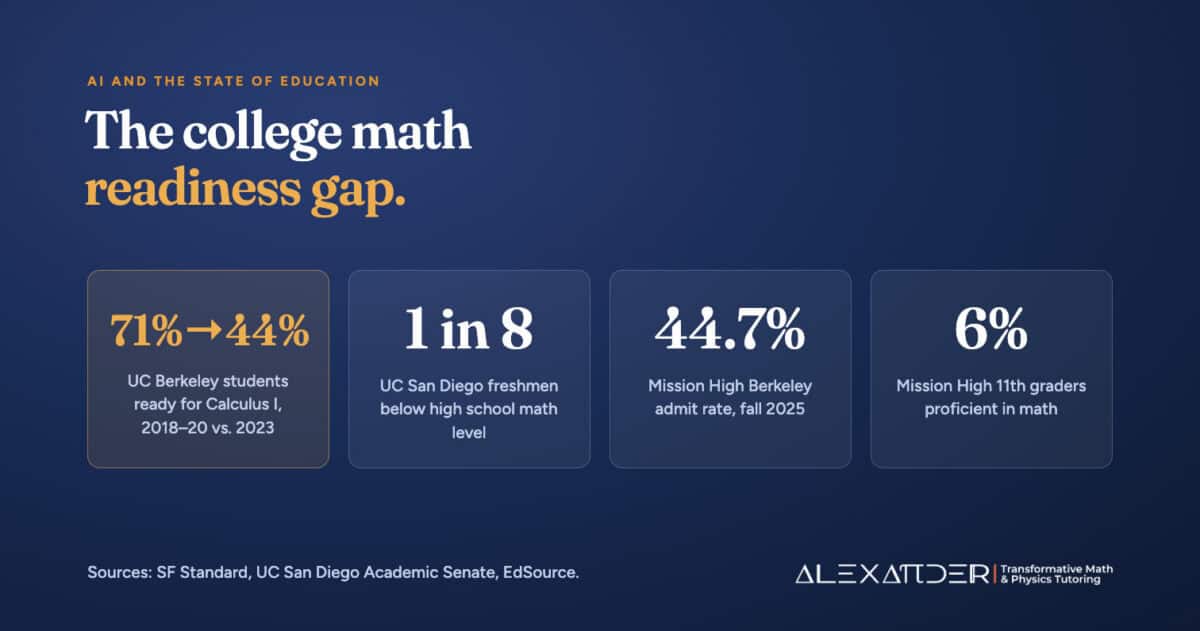
The students showing up aren’t out of the woods either. At the end of the 2021 school year, research by McKinsey & Company showed students were on average five months behind in math and four months behind in reading.
A study released in January 2022 by Brown University researchers quantified pandemic-related learning loss by comparing assessment data with pre-pandemic records. The declines were disappointing, but the study by no means indicates the losses are irreversible.
When this article was first written, the 2021-22 school year had gone more smoothly, but the numbers still showed an ongoing struggle. Zearn, a math curriculum provider used by many schools, tracks student progress in online math coursework, and in late March 2022 student progress was still down 7.4% compared to January 2020.
Math gaps from the pandemic years still showing up?
A one-on-one tutor can find exactly which skills were missed, fill them in, and get your child back on track in their current math class.
Book a risk-free first lesson →
Or explore our online tutoring services.
How can you help your student recover from COVID learning loss?
That’s the COVID impact on education. Now, what can you do about it?
A lot. You have resources and opportunities, and a terrific kid who only needs a little help and encouragement to thrive. Here’s how to provide it.
Why does staying positive matter?
It’s hard to overstate the impact of attitude. The first step to success is believing you can succeed, and that goes for you as well as your kid. Negative thinking is contagious, so don’t let it take hold.
Find the balance between validating their experience and insisting that they can catch up. Acknowledge their personal and environmental blocks, but don’t make them bigger than they are or accept a defeatist attitude.
“Students are afraid they’re behind, and they don’t want to be embarrassed. But this should never be about ego. It’s simply: where are you, what do we need to learn, and why does it matter?”
Jake Gerhardt, Alexander Tutoring math tutor
How can you promote reading?
Reading scores haven’t declined as sharply as math scores, but many students still aren’t reading at grade level. That was true before the pandemic and more so now.
Read to them, with them, around them. Reading parents create reading children, so talk with them about their books, and even yours when appropriate.
Take them to the library and encourage them to find books on their interests. Worry less about the content than the activity: they’ll build comprehension and vocabulary whether they’re reading a novel or a history of skateboarding.
If your child would rather avoid the written word, consider a rewards system. But try not to portray books as the vegetables they have to get through before dessert.
How do you make room for learning at home?
Set them up for success with distance-learning best practices and a dedicated space for their education.
Make room in your schedules and lives, too. Let them see you asking questions about the world, and find the answers together. Bring them into your passion for ancient history or gardening, or take a trip to an art museum or a nature hike.
Bad attitudes may be contagious, but so is enthusiasm.
Why get help with math and science?
For the best results, try high-dosage tutoring: one-on-one or small-group tutoring several times a week. Tutoring produces bigger gains than other interventions, leading to the largest improvement in academic performance and learning recovery.
You might make a great reading cheerleader, but generally speaking, parents don’t make good math tutors. You may not remember more advanced topics, and even if you do, the parent-child dynamic doesn’t make for effective learning here.
There are many resources to help you find a math tutor or one for upper-level science. Fellow parents may know a good tutor or program, and your child’s school or community organizations may offer enrichment for students hit by the pandemic.
We happen to know some excellent private tutors ourselves.
How can you engage with their schoolwork?
Do you know what they’re learning in school this month? Ask them about it; your interest will reinforce theirs. More ways to engage:
- Help them plan out larger projects and study schedules.
- Quiz them from their notes or school materials.
- Ask them to explain things to you. Nothing reinforces concepts like teaching them.
- Find community outings that tie into course material.
- Discuss study skills such as note-taking, test preparation, and class participation.
You don’t always have to have the right answers. Sometimes it’s enough to point them to the right questions.
Tutor tip: When your child explains a math problem to you, let them finish before correcting anything. The step where their explanation gets vague is usually the exact skill they missed.
Which study strategies help students catch up?
Strategies that help students understand concepts quickly and retain them for a long time are key to recovering from pandemic disruptions. These four are backed by research:
- Say it out loud. Research has shown that saying a word out loud while studying, instead of reading it silently, improves memory.
- Write it down. Research demonstrates that students who take notes with paper and pencil (or pen) retain more of what they’re learning.
- Don’t cram: space out study time. Forgetting and recalling helps long-term retention. These researchers emphasize that revisiting material in several smaller sessions beats cramming before a test.
- Test yourself, and learn from wrong answers. Self-testing is a highly effective way to learn, and researchers found that getting an answer wrong, then figuring out why, helps you get closer to the right answer next time.
For a step-by-step method built on these ideas, see our guide on how to study for math.
How can you take advantage of the summer?
If only you and your child had a few months to devote to learning recovery. In fact, you do: dedicate part of your child’s summer to their education.
Ask teachers which programs they recommend or research local opportunities, and look into summer reading programs at libraries or bookstores. Our guide to preventing summer slide in math has more ideas.
To build math skills and confidence, consider summer math-intensive tutoring. With no school homework or tests, we can focus on core issues and give students the tools they need for any math class.
As your family addresses COVID learning loss, remember that not all disruption is bad. You’ve been given an opportunity to engage with your child’s education and make sure they have everything they need going forward.
Tutor-written guide · PDF
Tips for Performing Well During STEM Exams
The game plan our tutors give students before a big math or science test. Enter your name and email and the guide opens right away.
- The night-before routine that beats cramming
- A first-five-minutes plan: formula dump, read-through, quick wins
- Halfway and 10-minute checkpoints so time never runs out
- Calm-down steps for test anxiety you can use mid-exam
Frequently asked questions
What is COVID learning loss?
COVID learning loss describes how far students fell behind pre-pandemic expectations because of school closures and disruptions. Students still made progress, so many educators prefer terms like “unfinished learning” or “learning recovery.”
How far behind did students fall during COVID?
McKinsey & Company research found that by the end of the 2020-21 school year, students were on average about five months behind in math and four months behind in reading.
Is COVID learning loss the same as summer learning loss?
No. Summer learning loss is students forgetting material over the break, while COVID learning loss is mostly a gap between where students are and where they would have been without the pandemic.
What is the best way to help students recover from learning loss?
High-dosage tutoring, meaning one-on-one or small-group tutoring several times a week, has shown bigger gains than other interventions. Staying positive, promoting reading, engaging with schoolwork and using summers well also help.
Which study habits help students catch up?
Research supports saying material out loud, taking handwritten notes, spacing study over several short sessions instead of cramming, and self-testing, including learning from wrong answers.
Close the gaps and build confidence
Our tutors are working mathematicians, scientists and engineers who teach one-on-one, online. Your first lesson is risk-free. Explore online tutoring services or meet our tutors.
Get in touch → We respond within 30 minutes.